
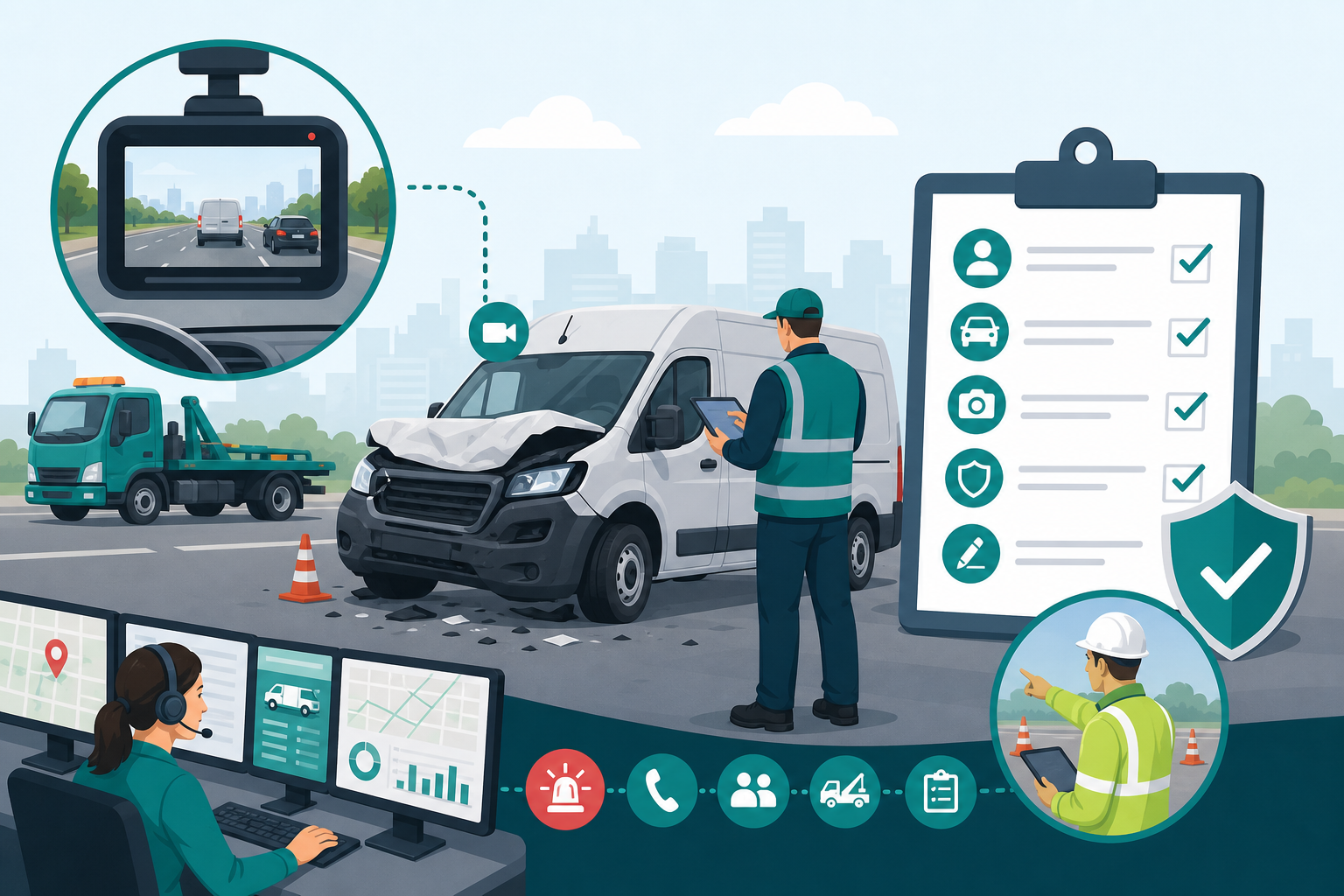
The first hour after a fleet incident sets legal, insurance, client, and human outcomes — often more than the crash itself. Bangladesh road conditions, mixed traffic, and high-value cargo loads mean transport managers face incidents ranging from depot scrapes to highway collisions with third-party injury. Without a playbook, teams skip photos, lose timestamps, admit informal liability on phone calls, or move vehicles before evidence capture.
Stress drives improvisation; improvisation destroys defensibility. A standard response — safety first, then evidence, then structured communication — protects drivers, company, and client relationship when followed calmly. Playbook must fit on one laminated card and in mobile checklist; complexity fails at midnight on Dhaka-Chittagong highway.
Regular drill quarterly — table-top walkthrough counts — keeps names and numbers current when real event occurs.
Insurance policy numbers, broker hotline, and legal contact should live in incident card at dispatch — not searchable only in finance drawer. Drivers carry laminated emergency steps in cabin: internal hotline first, then insurance threshold reminder, no admission of fault at scene. Post-incident debrief within forty-eight hours captures lessons for playbook update — was evidence complete, was client notified on time, did garage assessment match photos. Debrief is improvement, not blame session when conducted on facts.
Practice tabletop drill with dispatch and two drivers annually — role-play minor scrape and highway collision; measure time to complete evidence checklist. Drills expose missing phone numbers faster than real incident.
First fifteen minutes: safety and scene security
Injuries, traffic hazard, fire, cargo spill — address before documentation debate. Call emergency services per severity threshold pre-defined. Secondary collision risk on highway requires triangle, hazard lights, and safe positioning per training.
Start internal incident clock immediately — insurance notification windows often start at known time of loss.
- Life safety and medical aid first — always
- Secure scene from secondary impact where possible
- Notify internal incident lead within fifteen minutes
Standard evidence capture kit
Photos: all vehicle angles, damage close-up, road context, skid marks if relevant, third-party vehicle and ID, licence plates, cargo condition. Location pin, time stamp, weather, trip ID, driver statement factual not admitting fault. Dashcam clip request within one hour — overwrite risk real on some devices.
Third-party contact and witness details before vehicles leave if police allow — lost contact equals lost recovery.
Single spokesperson rule
Only named manager speaks to client, media, or third-party legal — drivers provide facts to internal lead only, not informal apology or blame at scene. WhatsApp voice notes from bystanders circulate fast; official channel slower but controlled.
Notify insurance and legal by pre-set threshold
Property damage above X taka, any injury, third-party vehicle, hazardous cargo, client load affected — triggers defined in policy card. No midnight debate whether to call — threshold table decides. Legal review before social media or client email beyond factual status.
Log incident in fleet system same day
Garage, insurance, trip billing adjustment, and client notification trail need one record. Informal memory fails by week two. Link incident to vehicle, driver, trip, client, and estimated downtime for utilization planning.
Client and cargo communication
Factual update to client account owner: time, location, cargo status, estimated delay, next update time — not speculation on fault. Pharma and high-value cargo may require immediate QA hold decision — client SOP in account file.
Post-incident recovery and fleet return
Garage damage assessment within twenty-four hours feeds utilisation plan — client needs realistic replacement ETA. Driver wellbeing check before return to duty — traumatic incident without pause risks second event. Update playbook after each significant incident — timestamp what worked and what failed in evidence capture or notification.
Insurance and legal closure tracked to same incident record — open incident without closure blocks inaccurate vehicle availability display.
Maintain spare evidence kit in dispatch — charged phone, backup camera, printed forms, torch — field teams in shock forget tools assumed always available in vehicle glove box.
Review insurance claim closure rate quarterly — open claims older than ninety days may indicate documentation gap worth playbook update.
Common mistakes to avoid
Moving vehicle before photos except safety requirement — insurance dispute common. Driver posting on social media — instruct no post in initial briefing. Another mistake is no insurance call because “damage looks small” — third-party claim may follow days later.
Do not abandon driver at scene without support contact — humanity and evidence quality both suffer. Avoid promising client compensation before legal review.
Include cargo-specific steps in playbook annex — hazardous, pharma, and high-value loads may require immediate client QA hold beyond generic incident flow. Generic playbook alone slows correct response.
Quick action checklist
- Life safety and emergency services per threshold
- Internal incident lead notified within fifteen minutes
- Photo set and location documented per kit standard
- Dashcam preservation requested immediately
- Single spokesperson assigned before external calls
- Insurance/legal threshold check completed same shift
- Incident logged in fleet system with trip and vehicle link
Playbook laminated card QR links to online version — field updates to emergency numbers propagate once centrally without reprinting entire fleet cabin stock immediately.
Legal review of playbook annually — insurance contact and regulatory reporting requirements change; outdated card misdirects field team during crisis.
Store incident photos in same system record as trip — scattered phone galleries delay insurance submission and client notification.
Include helper and second driver in incident briefing card — witnesses often hold critical detail primary driver misses under stress.
See dashcam and incident dispute resolution in our case studies. Explore incident logging and playback via demo or logistics fleet solutions.