
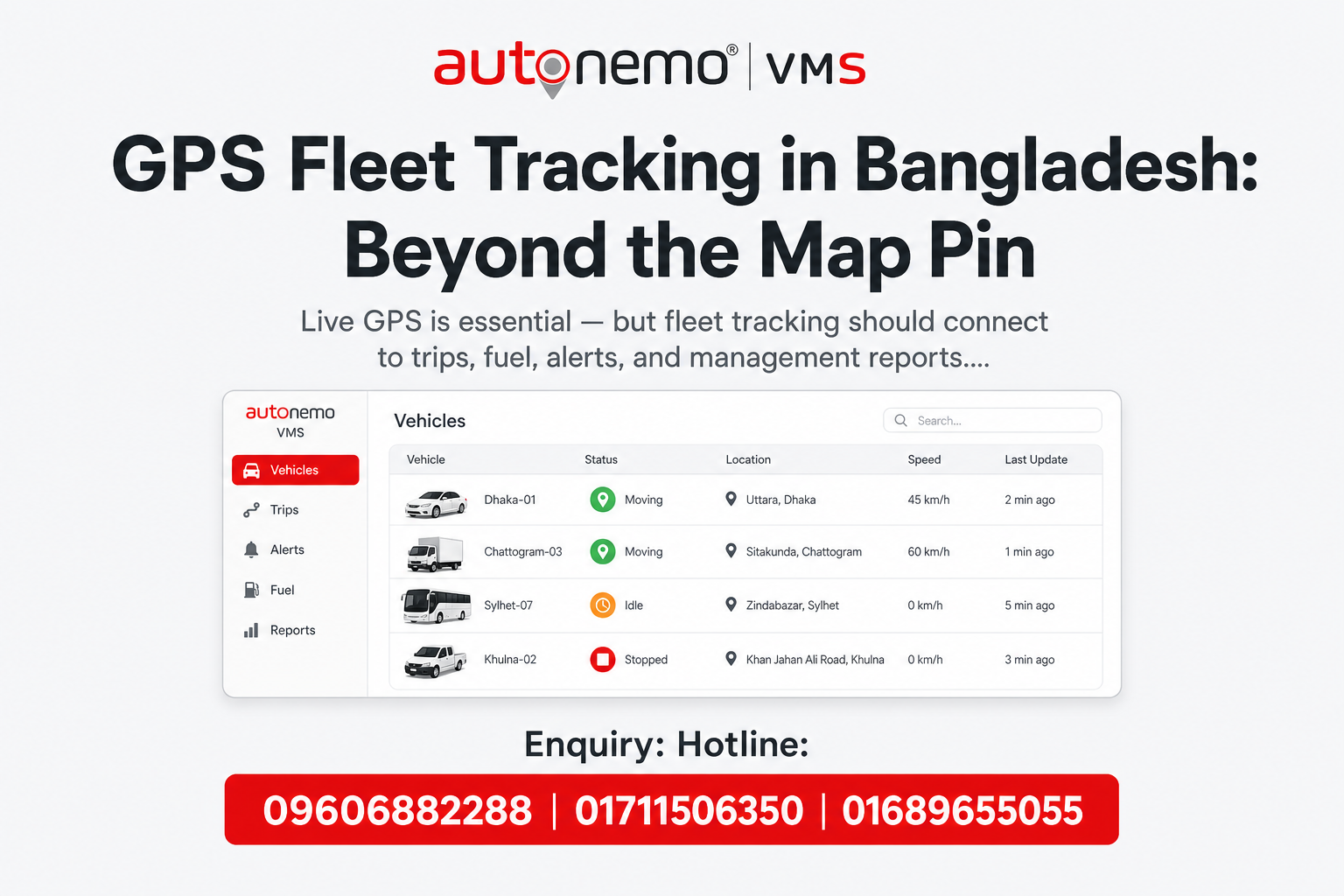
GPS fleet tracking is no longer optional for serious operators — clients, insurers, and internal audit all expect visibility. The mistake is treating GPS as a standalone toy instead of an operations layer inside your VMS.
What “good” fleet tracking includes
- Live map with vehicle list and status
- History playback for dispute resolution
- Speed, idle, and exception-style alerts
- Device support across common hardware brands
- Telecom-ready connectivity for local networks
Map pin vs management tool
A pin answers “where.” A VMS answers “which trip,” “is it profitable,” “did fuel match distance,” and “who is accountable.” Link GPS events to trip desk and fuel entries so tracking becomes a daily management habit.
Use cases in Bangladesh
Logistics distribution, cement carriers, corporate staff transport, rental fleets, cold chain, and inter-city commercial routes each need playback and alerts tuned to how they operate — not one generic view.
Security and access
Role-based access ensures drivers, dispatchers, clients, and executives see appropriate data. Share links where needed; protect payroll and rates everywhere else.
Autonemo VMS Pro pairs GPS with fleet ERP modules. View fleet & GPS features or compare with our article on top VMS features before you buy tracking-only software.